
What Is the Wabi Sabi Aesthetic?
The wabi sabi aesthetic traces back to 15th-century Japan, rooted in Zen Buddhism and the Japanese tea ceremony. Wabi describes a quiet rustic simplicity. Sabi describes the beauty of things that have aged and carry the marks of time.
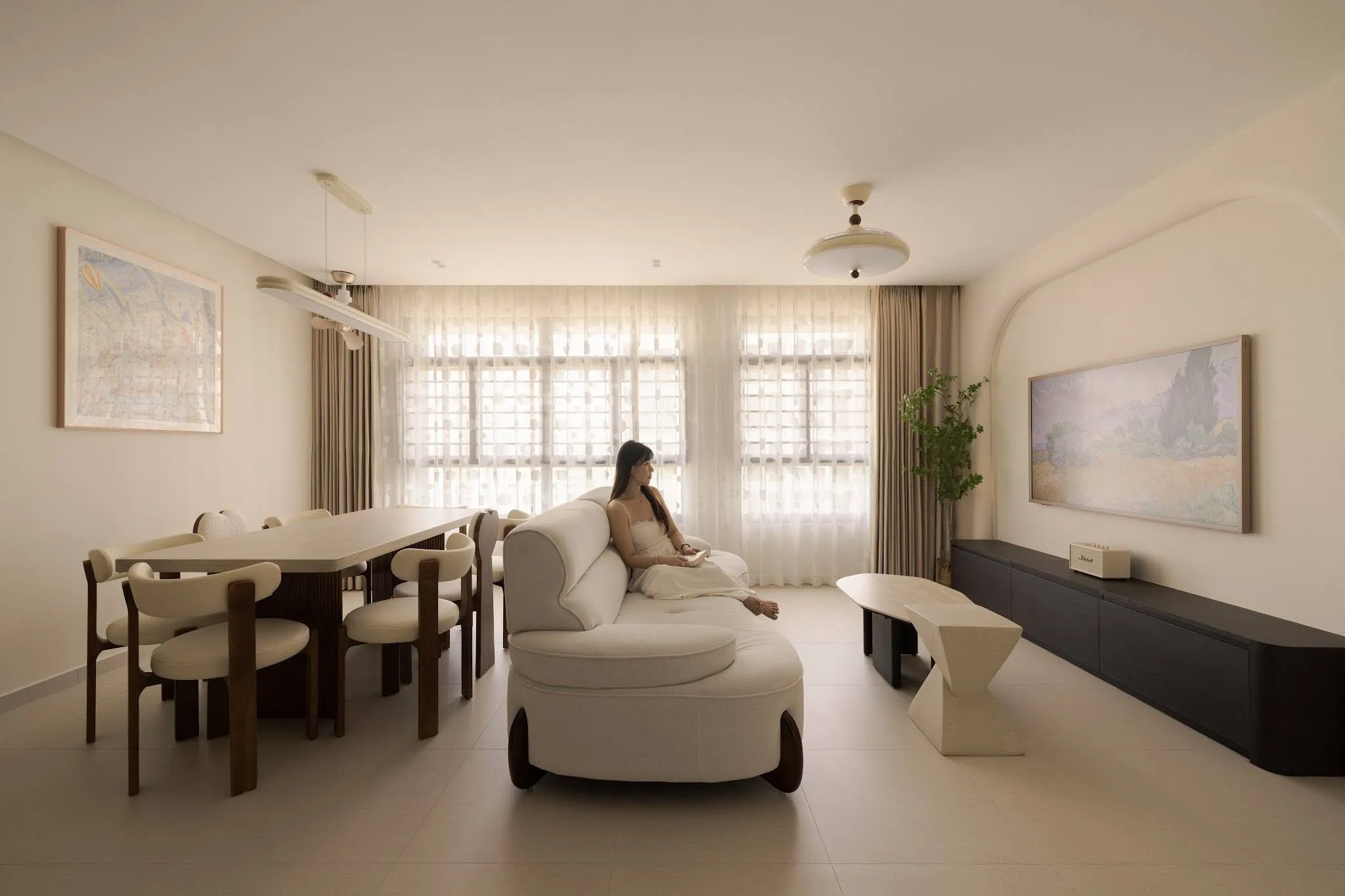
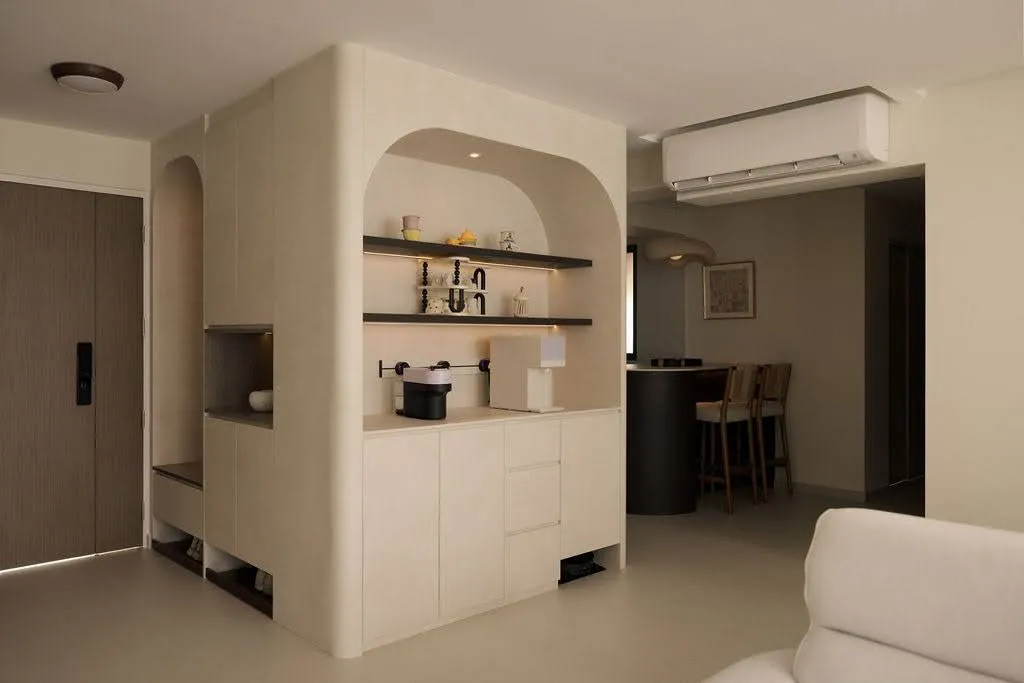
Together, they form a design philosophy that values the handmade, the irregular, the worn, and the honest over the polished and perfect. In a living room, this means materials with visible grain and texture, a colour palette drawn from earth rather than a trend chart, and deliberate empty spaces that let what you have chosen breathe.
1. Start With Limewash Paint, Not a Standard Emulsion
If there is one wall finish that appears in almost every documented wabi sabi renovation in Singapore, it is limewash paint. Unlike standard emulsion, limewash is applied in layers that dry with natural, uneven depth, creating texture that shifts with the light throughout the day. It is also breathable, which makes it well-suited to Singapore’s humidity.
For your wabi sabi living room, a warm white or stone-toned limewash on the feature wall sets the tone before you buy a single piece of furniture. This one decision does more for the wabi sabi aesthetic than any decor purchase.
2. Build a Wabi Sabi Colour Palette That Works in Singapore’s Light
The wabi sabi colour palette is commonly described as neutral, but that word does almost nothing useful. What actually works in Singapore’s equatorial light is warm whites with yellow or pink undertones rather than cool whites, which look flat and clinical in direct afternoon sun.
Layer from there: peachy tones, cream limestone, muted terracotta, soft sage, and weathered brown all hold their character across the day. Avoid cool greys and bright whites as base tones. The palette should feel like it came from soil and stone, not from a paint chart.
3. Choose Materials That Age Well in Singapore’s Climate
Singapore’s humidity is the most important factor in wabi sabi home decor, and most articles address it in one sentence. Teak ages gracefully in tropical conditions, developing a silver patina if left untreated or a warm honey tone with oiled finishes.
Natural stone holds its texture and character. Rattan and bamboo handle moisture well with good airflow. What you want to avoid is untreated pine and lightweight natural fibres that absorb moisture and degrade rather than age beautifully. What looks intentionally imperfect in year one can look neglected by year three if the material is wrong for the climate.
4. Keep Furniture Low and Quietly Imperfect
Low-profile furniture is non-negotiable in a wabi sabi style home. A sofa sitting at around 300 to 400mm from the floor draws the eye horizontally, makes the ceiling feel higher, and creates ease that a standard-height sofa does not.
Choose pieces with visible natural grain and handmade qualities, or authentic wear rather than a factory-applied distressed finish. A raw-edge timber coffee table, a rattan side table, or a reclaimed wood bench all carry the kind of honest imperfection that defines a genuine wabi sabi living room.
5. Get the Lighting Right Before Anything Else
Lighting is the most overlooked element in a wabi sabi living room. Two things matter above everything else. First, use bulbs in the 2700K to 3000K colour temperature range, the warm amber-white spectrum that creates depth and shadow.
Anything cooler, especially the 5000K to 6500K daylight bulbs sold in most Singapore hardware stores, produces a flat brightness that kills the wabi sabi aesthetic instantly. Second, fit dimmers on every circuit in the room.
The ability to lower the light in the evening is not a luxury in this aesthetic. It is the difference between a room that feels alive and one that feels like a showroom.
6. Replace Downlights With Layered Light Sources
Most Singapore HDB living rooms rely on a single overhead panel light or recessed downlights. Neither works for the wabi sabi aesthetic. Replace or supplement them with a pendant in rattan, fabric, or paper hung lower than you would normally position a fixture.
Add a floor lamp with a fabric or ceramic shade in one corner and a small table lamp on a shelf or side table. The goal is three or four lower-intensity light sources rather than one overhead source flooding the room evenly. This creates the shadow and depth that makes a wabi sabi room feel warm and dimensional rather than exposed.
7. Let Negative Space Be a Design Decision, Not a Gap
The Japanese concept of ma refers to the meaningful pause between things. In a wabi sabi living room, this means deliberate empty space on surfaces, walls, and floors. A single ceramic vase on a shelf means more than a shelf of collected wabi sabi decor ideas accumulated over time.
A bare section of wall beside a window creates the visual rest that allows everything else to breathe. The biggest mistake Singapore homeowners make is filling every surface because it feels unfinished. An intentionally empty space is not unfinished. It is a considered choice.
8. Add Botanicals With Restraint
Wabi sabi home decor includes nature, but not in the lush indoor-garden way of other styles. You are choosing one or two plants or dried botanicals that feel quiet, organic, and genuinely imperfect.
For Singapore conditions, snake plants and pothos handle low-light HDB living rooms well, and ZZ plants are nearly indestructible. Dried pampas grass, seed pods, or a branch of dried botanicals in a hand-thrown ceramic vessel outlast fresh flowers in Singapore’s humidity and suit the aesthetic far better. A single weathered terracotta pot with one plant says more than six matching planters.
9. Extend the Wabi Sabi Aesthetic Into Your Bedroom and Beyond
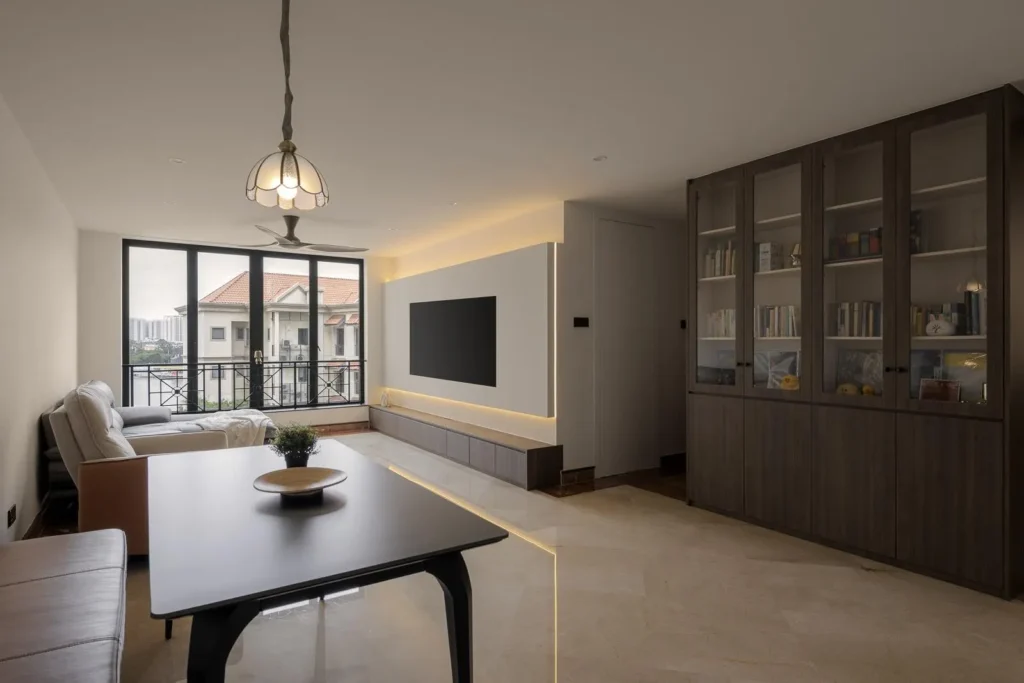
A wabi sabi living room loses its coherence if the rest of your home does not follow the same philosophy. One styled room surrounded by mismatched spaces will always feel incomplete.
For a wabi sabi bedroom, carry the same palette and material logic through: linen or undyed cotton bedding, a low platform bed in solid timber, minimal bedside decor, and no statement wallpaper. Extending the wabi sabi style home across every room transforms a single styled space into a genuinely lived philosophy. For a full picture of how wabi sabi principles apply to a complete Singapore renovation, see our wabi sabi interior design guide.
10. Know What NOT to Buy for a Wabi Sabi Living Room
Knowing what to avoid is as important as knowing what to buy. Chrome fixtures of any kind; high-gloss lacquer furniture; polyester or velvet cushion covers; cool-toned bright white walls; recessed downlights or fluorescent tubes.
Anything described as distressed or vintage-inspired that is clearly mass-produced; uniform matching decor sets; furniture that uses printed veneer to simulate wood grain; cold-toned LED strips; and over-buying wabi sabi decor from a single retailer to furnish the room in one visit.
Every one of these choices signals effort and intention, which is the opposite of what wabi sabi looks like when it is done well.
11 . Understand What Wabi Sabi Costs in Singapore
Knowing your budget before you start shapes every decision. A wabi sabi living room refresh focused on decor, soft furnishings, and paint rather than renovation can be achieved from around $5,000 to $15,000.
One documented Singapore condo project achieved a full wabi sabi aesthetic for approximately $20,000 through intentional material choices and selective furniture investment.
A full HDB renovation in the wabi sabi style, including built-in carpentry, flooring, and a limewash feature wall, ranges from around $70,000 to $96,000 based on recently completed Singapore projects. To explore what a wabi sabi HDB renovation looks like in practice, browse our HDB renovation portfolio.
Conclusion About Wabi Sabi Living Room Ideas
A wabi sabi living room is not about achieving a certain look. It is about building a space that feels honest, calm, and designed for how you actually live.
The principles across all ten ideas are consistent: choose materials with integrity, resist the urge to fill every surface, light the room with warmth, and let age and texture do the work that colour and pattern do in other styles. If you are ready to move from inspiration to a Singapore home that genuinely embodies this philosophy, the Twothree Design team offers complimentary design proposals for HDB, condo, and landed property renovations.